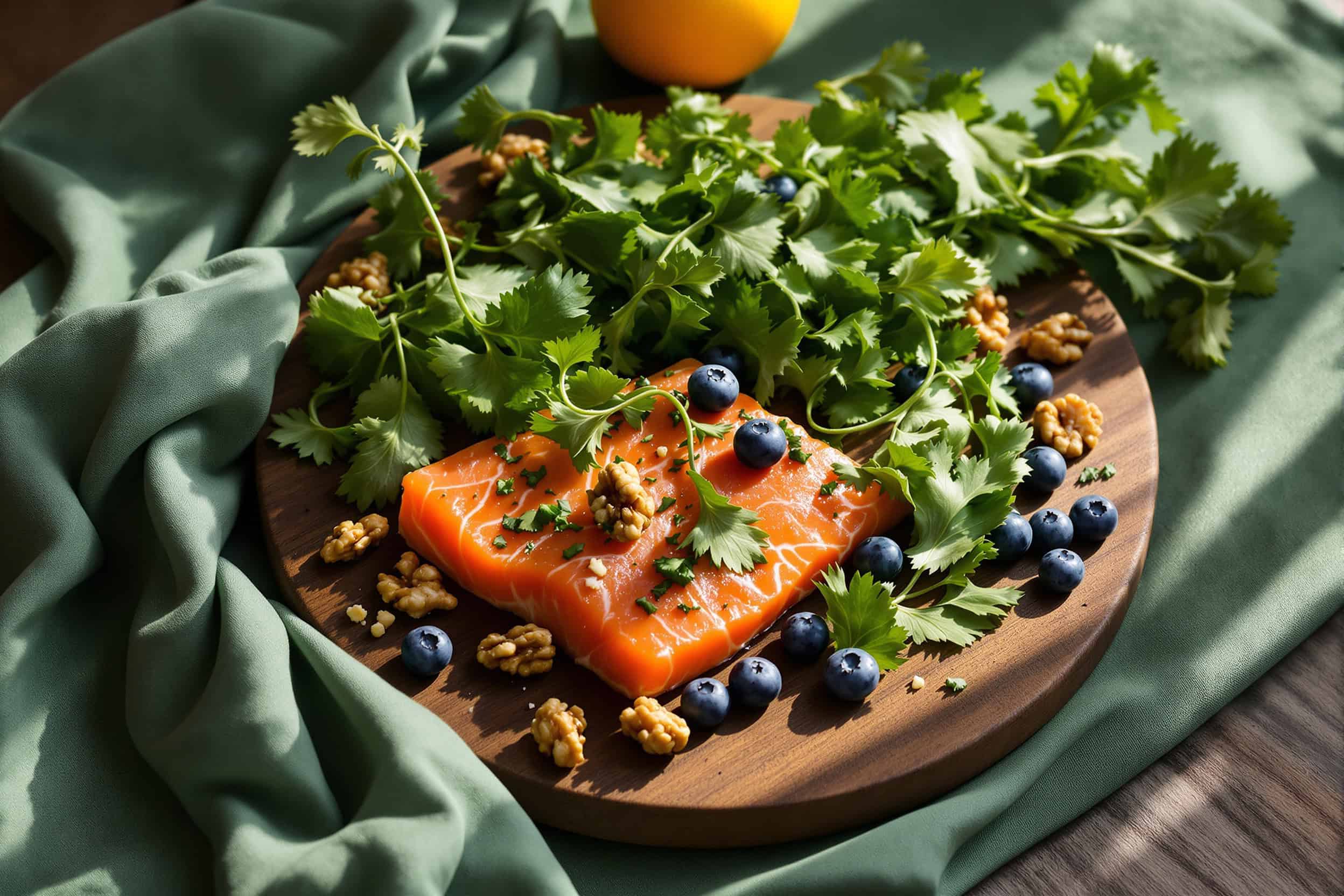
Nutrition and eye health are connected in ways patients sometimes underestimate. The structures of the eye — the lens, the retina, the optic nerve — are metabolically demanding tissues that depend on a steady supply of specific nutrients. Among the macronutrients and micronutrients that matter, protein plays a quiet but important role.
This article looks at why protein matters for the eye, how much an adult typically needs, and how protein fits into the broader nutritional picture for long-term ocular health.
Why protein matters for the eye
The eye contains some of the most protein-dense tissues in the body. The crystalline lens is approximately 35% protein — the highest protein concentration of any tissue. The cornea, the retina, the optic nerve, and the muscles that move the eye all depend on continuous protein turnover for repair and function.
Beyond structural protein, the eye depends on a steady supply of amino acids for:
- Replacement of damaged retinal photoreceptor outer segments (which are renewed continuously)
- Synthesis of enzymes that maintain the antioxidant defenses of the retina and lens
- Production of neurotransmitters used in retinal signaling
- Maintenance of the tear film, which contains over 1,500 different proteins
- Wound healing after surgery or injury
- Immune function in the ocular surface
How much protein adults actually need
The Recommended Dietary Allowance (RDA) for protein is 0.8 grams per kilogram of body weight per day — set as the minimum to prevent deficiency in healthy sedentary adults. For a 70 kg (154 lb) adult, that’s 56 grams per day.
For most adults, particularly older adults, the optimal intake is meaningfully higher. Most current research supports 1.0-1.2 g/kg/day for healthy older adults, and 1.2-1.6 g/kg/day for older adults who are active, recovering from illness, or trying to preserve lean body mass. For a 70 kg active older adult, that’s 84-112 grams per day.
Protein needs are higher for:
- Adults over 65 (sarcopenia prevention, slower protein synthesis)
- Active or athletic individuals
- Adults recovering from surgery or illness
- Adults healing from eye surgery or injury
- Vegetarians and vegans (slightly higher to account for lower bioavailability)
Specific amino acids relevant to the eye
Taurine
An amino acid concentrated in the retina at the highest levels of any tissue in the body. Found primarily in seafood and meat. Vegetarians may have lower taurine levels.
Cysteine and glycine
Building blocks of glutathione, the eye’s primary antioxidant. Adequate dietary protein supports glutathione synthesis.
Methionine
Required for the methylation reactions that produce tear film proteins and retinal pigments.
Branched-chain amino acids (leucine, isoleucine, valine)
Drive protein synthesis throughout the body, including the eye. Important for recovery after eye surgery.
Practical sources
High-quality protein sources for the eye-conscious eater:
- Cold-water fish (salmon, sardines, mackerel) — protein plus omega-3s for retinal health
- Eggs — particularly the yolk, which contains lutein and zeaxanthin for the macula
- Poultry and lean meat — taurine and complete amino acid profile
- Legumes and lentils — protein plus zinc and folate
- Greek yogurt and dairy — protein plus vitamin D
- Tofu and soy — complete protein for vegetarian diets
- Quinoa — one of the few complete plant proteins
Protein in the broader nutritional picture for eye health
Protein is necessary but not sufficient. The other nutritional elements that matter for long-term ocular health:
- Lutein and zeaxanthin (leafy greens, eggs) — concentrate in the macula and protect against AMD
- Omega-3 fatty acids (fatty fish, walnuts, flax) — meibomian gland function, retinal health
- Vitamin C and E (fruits, vegetables, nuts) — antioxidant protection
- Zinc (oysters, beef, legumes) — essential cofactor for retinal enzymes; deficiency contributes to AMD
- Vitamin A (orange/yellow vegetables, dairy, eggs) — retinal photoreceptor function
- B vitamins, particularly folate, B6, B12 — homocysteine metabolism affects vascular eye health
- Adequate water — tear film stability
The Mediterranean dietary pattern
The single best-studied dietary pattern for eye health is the Mediterranean diet — abundant vegetables, fruits, legumes, fish, olive oil, nuts, and whole grains, with moderate dairy and limited red meat. Multiple large studies show reduced rates of age-related macular degeneration, slower cataract progression, and lower diabetic retinopathy risk in adults who follow this pattern.
Within that pattern, adequate protein intake matters — but it does not need to come primarily from large servings of red meat. Fish, legumes, eggs, and dairy combined deliver complete amino acid profiles while preserving the broader pattern’s benefits.
The bottom line
Protein matters for the eye — but the framing matters. It’s not about consuming massive amounts. It’s about consistent adequacy, distributed across meals, paired with the broader spectrum of nutrients that support long-term ocular health. Most adults benefit from somewhat more than the RDA. Older adults benefit notably from somewhat more than that.
If eye health is part of why you’re paying attention to nutrition, the broader dietary pattern matters more than any single nutrient. Build meals around fish, vegetables, legumes, eggs, and whole grains. Add some olive oil. Skip the ultraprocessed foods. Stay consistent.
For more on age-related eye health and prevention, see the Senior Eye Care page.